What To Expect from the Housing Market in the Second Half of 2026
If the first half of this year has left you feeling stuck, you’re not the only one. Mortgage rates stayed higher than people wanted. Affordability remained tight. And uncertainty overseas added another layer of pressure nobody saw coming.
That’s why so many people are asking the same question: Will the second half of the year be any better for the housing market?
While nobody has a crystal ball, there are a few encouraging signs things could start moving in a better direction. Here’s what to watch.
Mortgage Rates Could Be Near a Turning Point
One of the biggest reasons mortgage rates haven’t come down yet is inflation. And higher energy prices and uncertainty overseas are at least part of the reason inflation is still elevated. The encouraging news?
Oil prices have already started coming back down.
That may not sound like it has much to do with buying a home. But historically, mortgage rates and oil prices tend to move in the same direction.
Take a look at the graph below. Generally, they rise and fall together. Both went up in February when the conflict began. While there’s been some volatility lately, experts at the U.S. Energy Information Administration (EIA) say oil prices are forecast to come down. And since oil prices have been on an overall downward trend lately, mortgage rates could come down too:
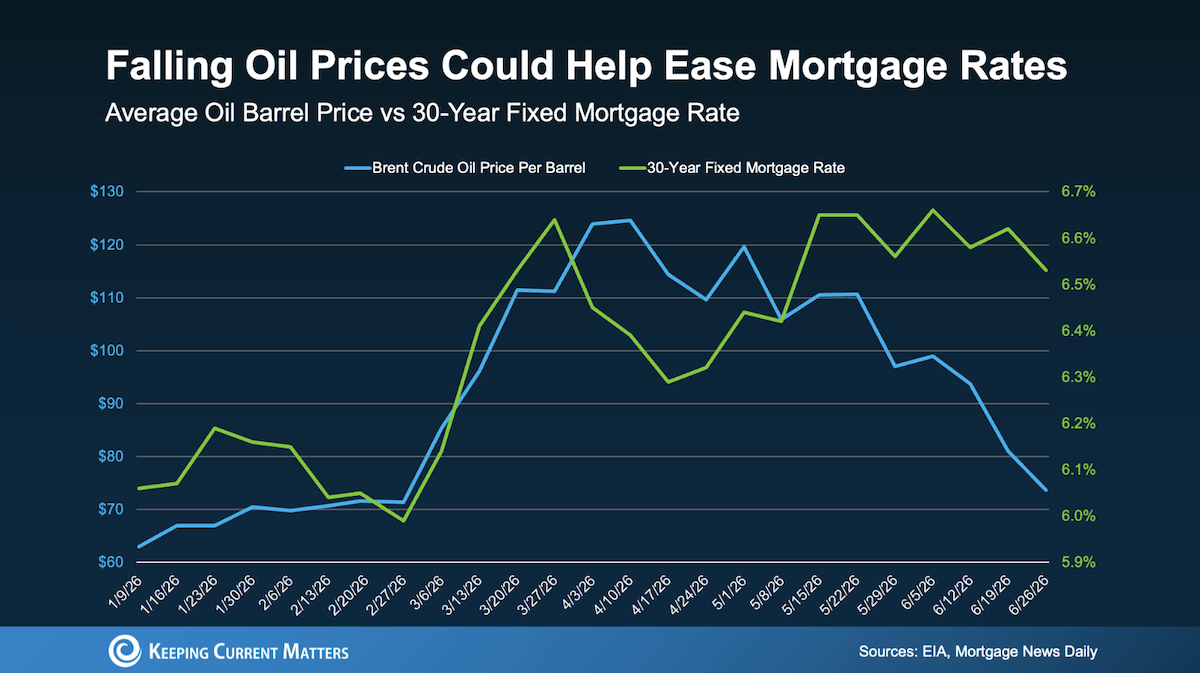
It’s too soon to say exactly when that will happen (or by how much they’ll fall), but if energy prices go down, inflation cools off, and tensions overseas ease, mortgage rates could come down in the second half of the year.
And that’s good news for anyone thinking about moving. The first half of the year tested everyone’s patience. The second half may finally reward it.
Home Prices Could Pick Back Up
A lot of people want home prices to fall too. But that’s not what most forecasts show.
While price trends are going to vary by area, and some places are seeing mild declines, experts still expect home prices to net positive this year at the national level.
In fact, they’re projecting prices will rise by an average of 2.3% in 2026 (see graph below):
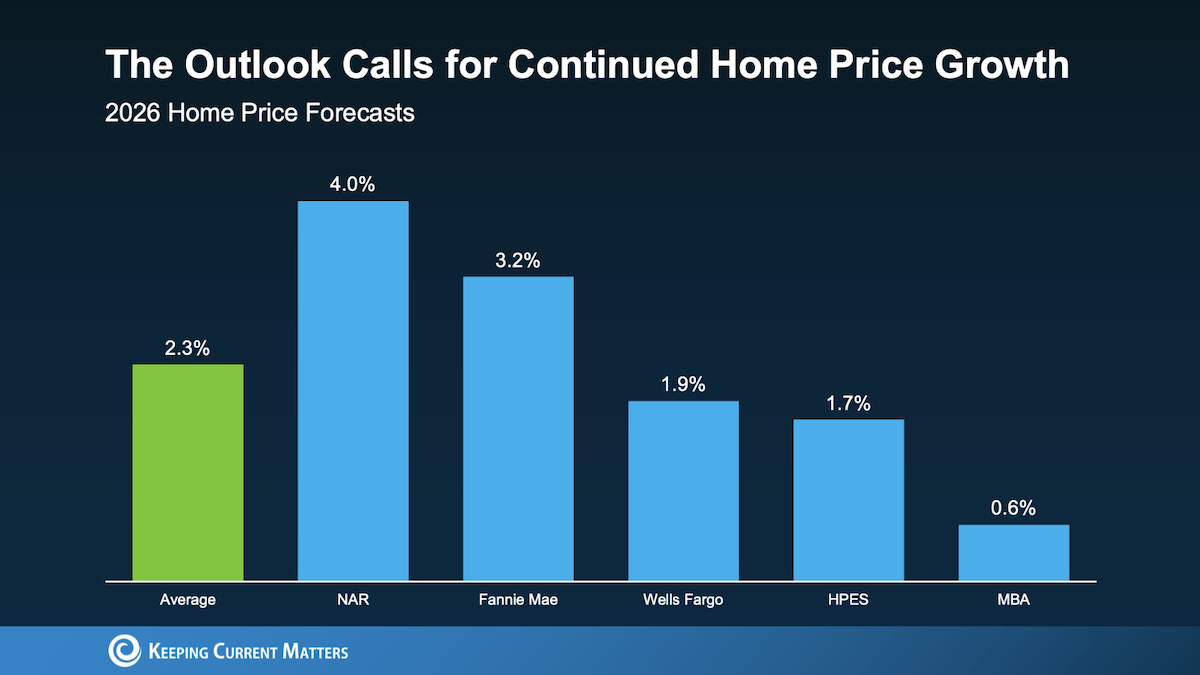
What does that mean for you? Right now, Federal Housing Finance Agency (FHFA)data shows prices are up about 1.7% nationally year-over-year. The average forecast for all of 2026? 2.3%.
Based on those projections, home price growth would have to pick up a bit during the second half of the year. Nothing dramatic, just enough to finish the year around that projected 2.3% gain.
Here’s why that’s possible.
The number of homes for sale has grown, but that growth may be starting to slow down. And if rates improve, more buyers could jump back into the market. More buyers competing could put modest upward pressure on prices, especially if inventory’s not growing as fast.
That’s why buyers shouldn’t assume waiting will guarantee a lower price later. And for sellers, that’s great news if you’ve been worried about your home’s value.
More Homes Are Expected To Sell
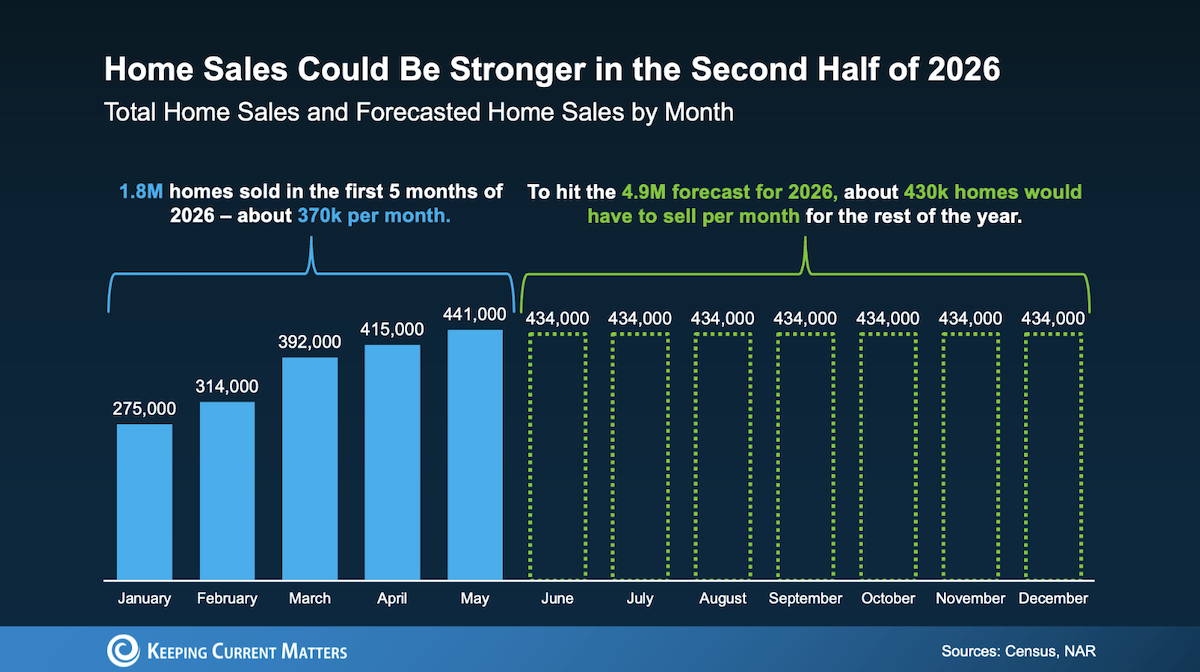
If you’ve been wondering why the housing market has felt quieter lately, you’re not imagining it. Home sales have been slower than many experts expected. But that doesn’t mean people have stopped wanting to move.
A lot of people still want or need to make a change. They’ve just been waiting for more certainty, better affordability, or a clearer read on where the market is headed. And early signs show that may be on the horizon.
If rates ease and confidence improves, more people may finally move. As Odeta Kushi, Deputy Chief Economist at First American, explains:
Why? Summer buyers are usually operating on a set timeframe. They’re trying to move before the next school year or when they have more PTO and warmer weather to tour houses. That urgency can translate into better offers.
Now, that doesn’t mean you should price your house 4% higher this Summer. That would actually be a mistake in today’s market.
It just means if you’re looking to get as much for your house as you reasonably can, a Summer move could be a smarter play than waiting until later this year.
Because based on typical seasonality, you may get more for your house than you would if you waited until the Fall or Winter (when there are typically fewer buyers active).
And if you’re considering a move anyway, that’s worth factoring in.
Bottom Line
Could waiting until later this year work out? Sure. But it's important to understand what you may gain by moving now too – that way you have the full picture before you decide.
If a 2026 move is on your radar, talk to an agent about what matters most to you. Depending on your priorities, Summer could be your moment.